
Painting A Village at Night - Jules Dupré | Art print


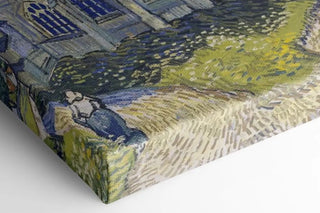
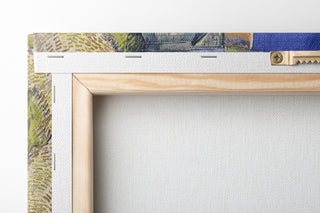
View from behind
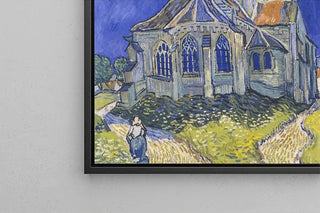
Frame (optional)
In the tranquility of a peaceful night, the artwork "Un village la nuit" by Jules Dupré transports us to a universe filled with serenity and mystery. This depiction of a village bathed in the gentle light of stars and lanterns evokes an atmosphere that is both intimate and universal. Through this painting, Dupré manages to capture the very essence of the night, a moment often overlooked in art, but which here becomes the protagonist of a lively scene. Shadows dance on the facades of houses, while the starry sky seems to whisper forgotten secrets. It is an invitation to contemplate the fleeting beauty of the night, to immerse oneself in a landscape where every detail tells a story.
Style and uniqueness of the work
Jules Dupré's style is distinguished by a remarkable mastery of colors and lights. In "Un village la nuit," he uses a palette of dark shades highlighted by luminous splashes, creating a striking contrast that immediately draws the eye. The nuances of blue, black, and gold intertwine to give life to a nocturnal scene where light becomes a narrative element in its own right. The technique of rapid brushstrokes, typical of the Romantic movement, allows Dupré to convey raw and authentic emotion. Each stroke of the brush seems to breathe, infusing a dynamic energy into the entire composition. This artwork does not merely depict a landscape; it evokes feelings of peace, solitude, and contemplation, making each viewing a unique experience.
The artist and his influence
Jules Dupré, an emblematic figure of French Romantic landscape painting, knew how to establish himself through his ability to translate nature into emotions. Born in 1811, he was influenced by the great masters of his time, while developing a personal style that is uniquely his own. His fascination with nocturnal landscapes and light effects paved the way for a new approach to landscape painting, where atmosphere and emotion often surpass realistic representation. Dupré was also a pioneer in using color to express feelings, a technique that inspired many subsequent artists. His legacy endures, and
Painting A Village at Night - Jules Dupré | Art print

-10% FROM €95 IN PURCHASES
-15% FROM €195 IN PURCHASES
Regular price
- Unit price
- per
Tax included.
Free shipping
€4.90 / Free shipping on orders over €39
Satisfied or Money Back
Free returns within 30 days
10-year warranty
Our prints are guaranteed for 10 years
Any questions? We are here!
by email to contact@artemlegrand.com
THE STEPS OF YOUR ORDER

STEP 1 - ORDER PLACED
Your order has been confirmed and we are starting production
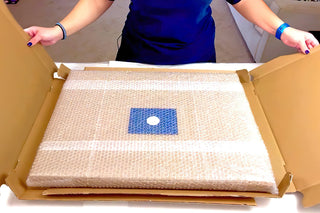
STEP 2 - SHIPPING
We ship your order. We send you an email to track the progress

STEP 3 - DELIVERY
You receive your order. You can also, according to your choice, be delivered to a relay point.
Matte finish
View from behind
Frame (optional)
In the tranquility of a peaceful night, the artwork "Un village la nuit" by Jules Dupré transports us to a universe filled with serenity and mystery. This depiction of a village bathed in the gentle light of stars and lanterns evokes an atmosphere that is both intimate and universal. Through this painting, Dupré manages to capture the very essence of the night, a moment often overlooked in art, but which here becomes the protagonist of a lively scene. Shadows dance on the facades of houses, while the starry sky seems to whisper forgotten secrets. It is an invitation to contemplate the fleeting beauty of the night, to immerse oneself in a landscape where every detail tells a story.
Style and uniqueness of the work
Jules Dupré's style is distinguished by a remarkable mastery of colors and lights. In "Un village la nuit," he uses a palette of dark shades highlighted by luminous splashes, creating a striking contrast that immediately draws the eye. The nuances of blue, black, and gold intertwine to give life to a nocturnal scene where light becomes a narrative element in its own right. The technique of rapid brushstrokes, typical of the Romantic movement, allows Dupré to convey raw and authentic emotion. Each stroke of the brush seems to breathe, infusing a dynamic energy into the entire composition. This artwork does not merely depict a landscape; it evokes feelings of peace, solitude, and contemplation, making each viewing a unique experience.
The artist and his influence
Jules Dupré, an emblematic figure of French Romantic landscape painting, knew how to establish himself through his ability to translate nature into emotions. Born in 1811, he was influenced by the great masters of his time, while developing a personal style that is uniquely his own. His fascination with nocturnal landscapes and light effects paved the way for a new approach to landscape painting, where atmosphere and emotion often surpass realistic representation. Dupré was also a pioneer in using color to express feelings, a technique that inspired many subsequent artists. His legacy endures, and
12,34 €