
Painting A man offers money to a young woman - Judith Leyster | Art print


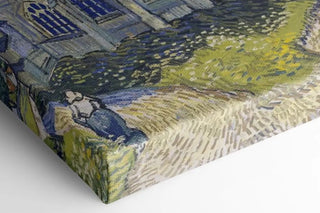
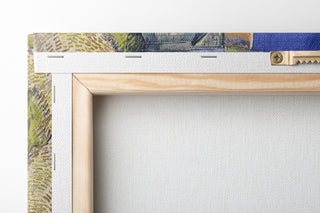
View from behind
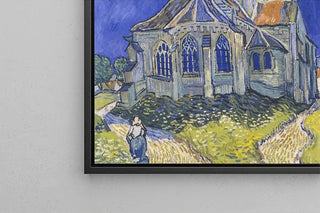
Frame (optional)
In the fascinating world of 17th-century painting, the art print "A Man Offering Money to a Young Woman" by Judith Leyster stands out for its ability to capture a moment of intimacy and social tension. This scene, imbued with realism and subtlety, evokes universal themes such as seduction, morality, and power dynamics. Leyster, an iconic figure of the Dutch Baroque movement, invites us to delve into a universe where every detail matters, and where the emotions of the characters are palpable. By contemplating this work, the viewer is transported into a silent dialogue, an interaction charged with meanings that transcend time.
Style and uniqueness of the art print
Judith Leyster's style is characterized by an impressive mastery of light and shadow, a technique that defines the Baroque. In "A Man Offering Money to a Young Woman," the light delicately illuminates the faces, revealing nuanced expressions that enhance the scene's intensity. The choice of colors, both vivid and harmonious, creates a vibrant atmosphere that draws the eye. The details of the composition, such as richly textured clothing and carefully chosen accessories, demonstrate a particular attention to the depiction of everyday life. Leyster's visual language, both accessible and sophisticated, allows us to grasp the complexity of human relationships while offering a window into the society of her time.
The artist and her influence
Judith Leyster is a pioneer in a field largely dominated by men, and her work marked a turning point in art history. Born in 1609 in Haarlem, Leyster established herself as a talented artist, earning the status of master in the Guild of Saint Luke. Her work, often compared to that of Frans Hals, stands out for a more intimate and psychological approach. Leyster influenced many contemporary and later artists, paving the way for increasing recognition of women artists. Her ability to capture moments of life, both ordinary and extraordinary, has left an indelible mark on the Dutch artistic landscape and beyond.
Painting A man offers money to a young woman - Judith Leyster | Art print

-10% FROM €95 IN PURCHASES
-15% FROM €195 IN PURCHASES
Regular price
- Unit price
- per
Tax included.
Free shipping
€4.90 / Free shipping on orders over €39
Satisfied or Money Back
Free returns within 30 days
10-year warranty
Our prints are guaranteed for 10 years
Any questions? We are here!
by email to contact@artemlegrand.com
THE STEPS OF YOUR ORDER

STEP 1 - ORDER PLACED
Your order has been confirmed and we are starting production
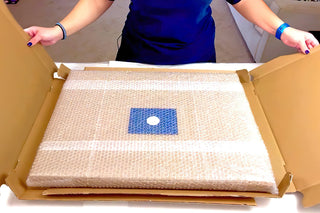
STEP 2 - SHIPPING
We ship your order. We send you an email to track the progress

STEP 3 - DELIVERY
You receive your order. You can also, according to your choice, be delivered to a relay point.
Matte finish
View from behind
Frame (optional)
In the fascinating world of 17th-century painting, the art print "A Man Offering Money to a Young Woman" by Judith Leyster stands out for its ability to capture a moment of intimacy and social tension. This scene, imbued with realism and subtlety, evokes universal themes such as seduction, morality, and power dynamics. Leyster, an iconic figure of the Dutch Baroque movement, invites us to delve into a universe where every detail matters, and where the emotions of the characters are palpable. By contemplating this work, the viewer is transported into a silent dialogue, an interaction charged with meanings that transcend time.
Style and uniqueness of the art print
Judith Leyster's style is characterized by an impressive mastery of light and shadow, a technique that defines the Baroque. In "A Man Offering Money to a Young Woman," the light delicately illuminates the faces, revealing nuanced expressions that enhance the scene's intensity. The choice of colors, both vivid and harmonious, creates a vibrant atmosphere that draws the eye. The details of the composition, such as richly textured clothing and carefully chosen accessories, demonstrate a particular attention to the depiction of everyday life. Leyster's visual language, both accessible and sophisticated, allows us to grasp the complexity of human relationships while offering a window into the society of her time.
The artist and her influence
Judith Leyster is a pioneer in a field largely dominated by men, and her work marked a turning point in art history. Born in 1609 in Haarlem, Leyster established herself as a talented artist, earning the status of master in the Guild of Saint Luke. Her work, often compared to that of Frans Hals, stands out for a more intimate and psychological approach. Leyster influenced many contemporary and later artists, paving the way for increasing recognition of women artists. Her ability to capture moments of life, both ordinary and extraordinary, has left an indelible mark on the Dutch artistic landscape and beyond.
12,34 €